
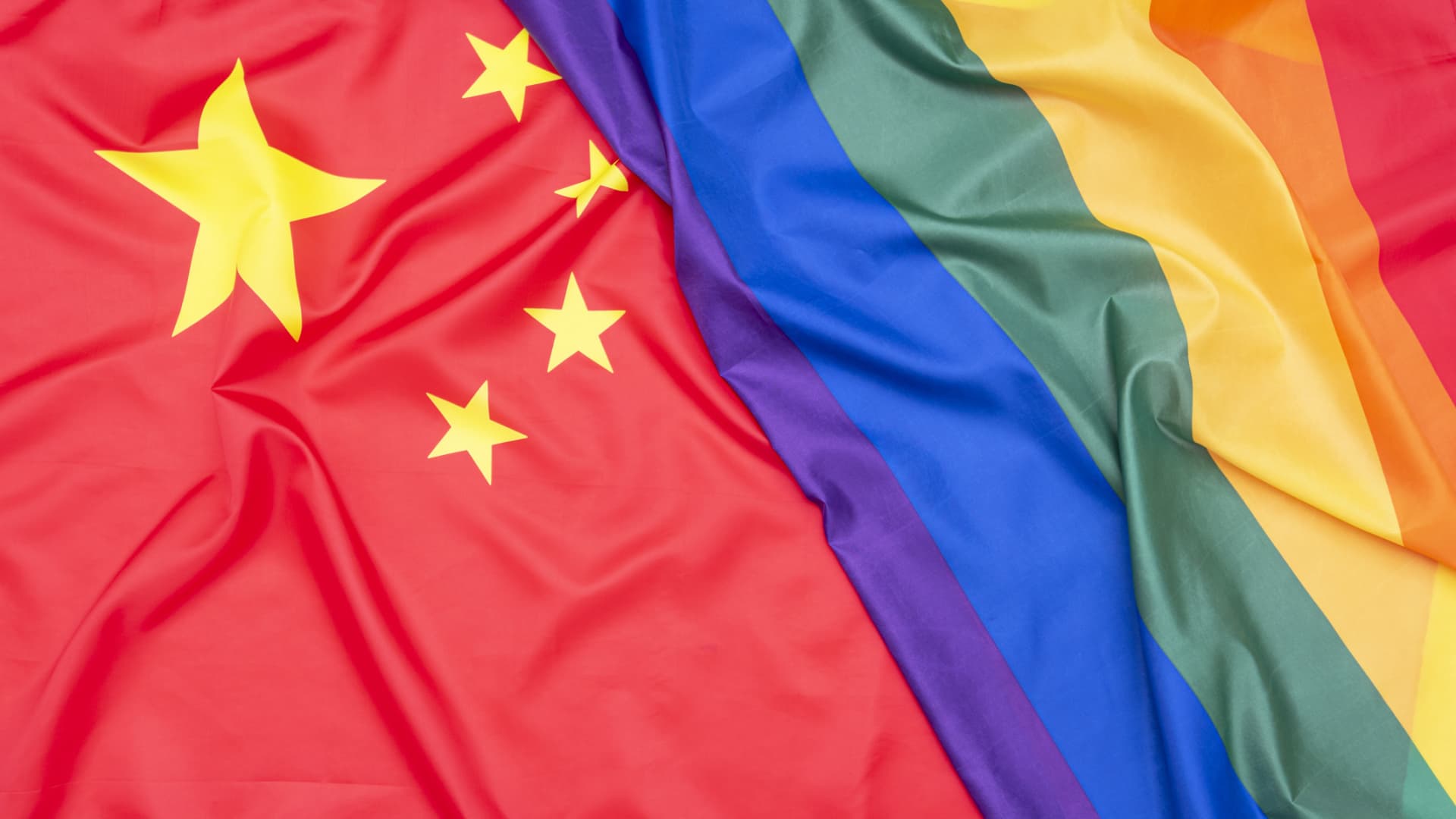

Flag of China and LGBT rainbow flag
Alxeypnferov | Istock | Getty Images
Apple has confirmed the removal of two prominent gay dating applications, Blued and Finka, from its Chinese iOS App Store. This action follows directives from the Cyberspace Administration of China (CAC), the nation’s primary internet regulator and censorship authority.
The apps’ disappearance over the weekend prompted inquiries, leading to Apple’s confirmation. In a statement, the tech giant defended its compliance with local laws, asserting its obligation to adhere to the regulations of countries where it operates.
“Based on an order from the Cyberspace Administration of China, we have removed these two apps from the China storefront only,” Apple stated, clarifying that the apps were already unavailable in other regions.
Interestingly, a “lite” version of Blued remains accessible for download on the Chinese App Store, suggesting a potentially nuanced approach to content regulation.
This development highlights the increasing scrutiny of app store content in China. The removal of Blued and Finka follows a pattern of app removals, notably the 2022 removal of Grindr, another popular gay dating app, after the CAC initiated a crackdown on content deemed illegal or inappropriate.
Moreover, China’s regulatory landscape for apps has tightened. In 2023, the government mandated that all apps serving local users register and obtain licenses, leading to the removal of numerous foreign apps from the iOS platform.
Regulators have also directly engaged with companies like Apple to address concerns regarding app content. In April 2024, at the request of the CAC, Apple removed Meta’s WhatsApp and Threads from its Chinese iOS store, citing national security concerns. This move underscores the delicate balance Apple must maintain between adhering to local regulations and providing its services in a crucial market.
Apple’s willingness to comply with these requests in China is noteworthy, given the country’s significance as its largest overseas market outside the United States. This situation underscores the inherent challenges multinational corporations face when navigating varying legal and cultural landscapes.
Beyond the regulatory environment, the removal of Blued and Finka may reflect a broader trend of increased scrutiny and censorship targeting the LGBTQ community in China. Recent years have witnessed the closure of prominent advocacy groups, including the Beijing LGBT Center. While homosexuality was decriminalized in China in 1997, same-sex marriage remains unrecognized, highlighting the complex social and political context surrounding LGBTQ rights in the country.
The removal of these apps not only affects users seeking connection and community but also raises questions about the future availability and censorship of other social platforms in the region. The incident underscores the increasing need for tech companies to develop sustainable strategies and ethical frameworks for operating in markets with differing values and priorities.
Original article, Author: Tobias. If you wish to reprint this article, please indicate the source:https://aicnbc.com/12646.html
