
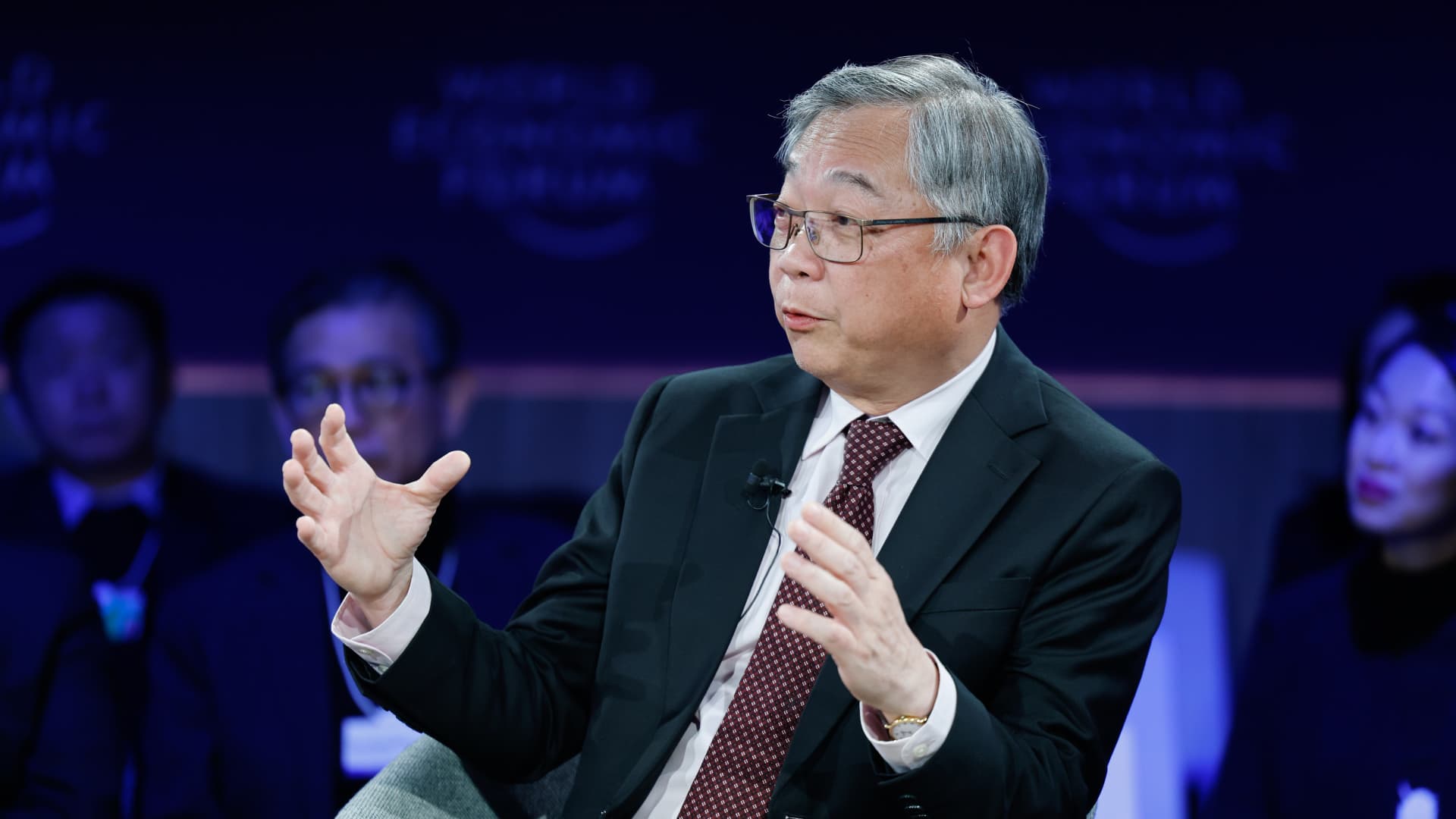

Gan Kim Yong, Singapore’s deputy prime minister, during a panel session, at the World Economic Forum (WEF) in Davos, Switzerland, on Tuesday, Jan. 21, 2025.
Stefan Wermuth | Bloomberg | Getty Images
Singapore remains steadfast in its commitment to a multilateral, rules-based trading system, even amidst escalating global trade tensions, according to Deputy Prime Minister Gan Kim Yong. Speaking at the Singapore Fintech Festival on Wednesday, Gan highlighted the potential for enhanced collaboration between the Association of Southeast Asian Nations (ASEAN) and the European Union (EU) as a key strategy for navigating the current economic landscape.
In a fireside chat with DBS CEO Tan Su Shan, Gan, also Singapore’s Minister for Trade and Industry, emphasized the transformative impact of a potential digital economic agreement between the EU and ASEAN. “If we are able to bring both EU and ASEAN together to discuss a digital economic agreement… I think there will be a major breakthrough,” he stated, underscoring the strategic significance of bridging the two economic blocs.
While acknowledging the distinct identities of the EU and ASEAN, Gan stressed that geographical boundaries should not impede collaborative efforts. “EU will not be part of ASEAN. ASEAN will not be part of EU, but it doesn’t stop [the] EU and ASEAN [to] come together to discuss areas that we can work together,” he explained.
Gan cautioned that such an agreement would require careful and deliberate negotiations. He envisioned a phased approach, beginning with discussions on establishing foundational rules for digital economic collaboration before progressing to more complex areas. The move signals a pragmatic approach to fostering digital trade ties given the complexities of aligning regulatory frameworks and economic priorities between the two regions.
The strategic imperative for strengthening digital ties is underscored by the burgeoning Southeast Asian digital economy, which is projected to exceed $300 billion in gross merchandise value in 2025, according to industry reports. This growth trajectory presents significant opportunities for both ASEAN and the EU to capitalize on enhanced collaboration.
Beyond the EU, Gan expressed Singapore’s ambitions for ASEAN to forge digital economy agreements with the Gulf Cooperation Council and to actively engage with the Comprehensive and Progressive Agreement for Trans-Pacific Partnership (CPTPP) to identify avenues for facilitating trade and investment. These initiatives demonstrate Singapore’s proactive stance in diversifying its economic partnerships and promoting regional economic integration.
“So I think there are a lot of opportunities still, despite the headwinds and the uncertainties we are seeing,” Gan remarked, expressing optimism about the potential for growth despite prevailing global challenges.
In a separate segment of his address, Gan addressed the need to reform the World Trade Organization (WTO) to ensure its continued relevance in the evolving global trade environment. He emphasized that Singapore is keen to work with international partners to revitalize and modernize the organization.
“WTO is still [an] important foundation for this rules-based trading system,” Gan affirmed. However, he acknowledged that the current WTO architecture may no longer be suitable for addressing contemporary trade challenges. “We will need to transform because the current design architecture of WTO may no longer be workable, and it’s important for us to come together to discuss what is the way forward, what are the areas that require transformation,” he concluded. This call for reform reflects a growing consensus among nations regarding the urgent need to adapt the WTO to reflect the realities of the 21st-century global economy.
Original article, Author: Tobias. If you wish to reprint this article, please indicate the source:https://aicnbc.com/12698.html
