
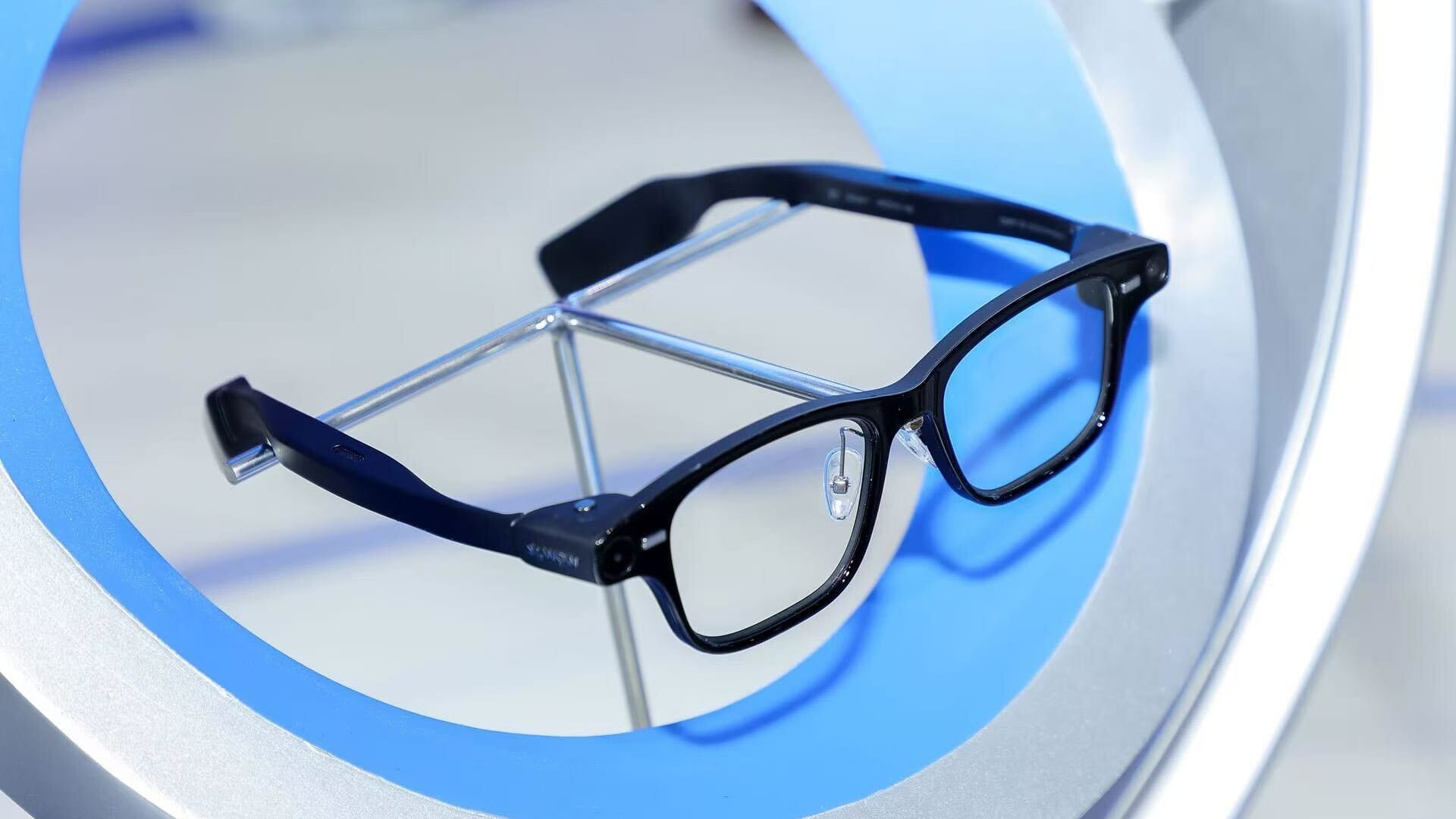

Alibaba has entered the smart‑glasses arena with the launch of its Quark AI Glasses, marking the Chinese conglomerate’s first product in this emerging category.
Alibaba
Alibaba’s artificial‑intelligence‑powered smart glasses went on sale Thursday as the company intensifies its push into consumer AI amid a tightening competitive landscape.
The Quark AI Glasses, first unveiled in July, are offered in two configurations: the premium S1 model priced at 3,799 yuan (approximately $536) and the entry‑level G1 at 1,899 yuan.
Both variants are tightly integrated with Alibaba’s proprietary Qwen large‑language model – the firm’s counterpart to ChatGPT – and connect seamlessly to the newly released Qwen app. Users can issue voice commands to perform tasks such as real‑time translation, AI‑generated meeting notes, and instant product price checks on Taobao, Alibaba’s flagship e‑commerce platform.
Each pair features a camera embedded in the frame and lenses that double as micro‑displays. The primary distinction between the S1 and G1 lies in display resolution and field‑of‑view, with the S1 offering a higher‑density panel for richer visuals.
Key capabilities include:
- On‑the‑go language translation powered by Qwen’s multilingual engine.
- Automatic transcription and summarization of meetings, leveraging generative AI to produce concise notes.
- Visual product recognition: snap a photo of an item and the glasses instantly surface the price and purchase options on Taobao.
- Voice‑activated virtual assistant for contextual queries.
Alibaba is positioning the Quark glasses as the next major consumer device after the smartphone, echoing a broader industry belief that wearable AR hardware will soon achieve mass adoption.
Competitors are moving in parallel. In September, Meta introduced its $799 Ray‑Ban Display glasses, featuring gesture control via a dedicated wristband. Chinese rivals such as Xiaomi and the startup Xreal are also fielding AR eyewear aimed at the domestic market.
Although the smart‑glasses market remains modest, it is accelerating quickly. Analyst firm Omdia projects global shipments to exceed 10 million units by the end of 2026—more than double the volume anticipated for 2025.
For Alibaba, the Quark glasses represent a strategic extension of its consumer‑AI ecosystem. The Qwen app recorded 10 million downloads within the first week of its public beta, underscoring strong user interest in generative‑AI tools. Meanwhile, Alibaba Cloud, the primary revenue source for the company’s AI services, reported a significant uptick in growth during the latest quarter, driven in part by enterprise demand for large‑model inference and AI‑enhanced workloads.
Alibaba’s AI roadmap is anchored by aggressive investment in proprietary models, open‑source releases, and partnerships across sectors ranging from retail to finance. By embedding its Qwen model directly into hardware, the firm can capture data loops that improve model performance while simultaneously monetizing through hardware sales, subscription services, and commerce referrals.
Key challenges remain. Consumer adoption hinges on price sensitivity, battery life, and the perceived utility of AR overlays in everyday scenarios. Supply‑chain constraints for advanced optics and semiconductor components could also pressure margins, especially as rivals vie for the same silicon allocations.
Nevertheless, Alibaba’s entry adds credibility to the AR wearables market and may compel other Chinese tech giants—most notably Baidu and Tencent—to accelerate their own hardware initiatives. If the company can leverage its e‑commerce ecosystem to drive repeat usage, the Quark AI Glasses could become a profitable conduit for cross‑selling cloud services, advertising, and digital commerce.
As the competitive race heats up, investors will watch closely whether Alibaba can translate its AI expertise into sustained hardware revenue, or whether the glasses will remain a niche product in an otherwise service‑focused portfolio.
Original article, Author: Tobias. If you wish to reprint this article, please indicate the source:https://aicnbc.com/13681.html
