.
Key Terms
mandibular advancement
medical
Mandibular advancement refers to the intentional forward positioning of the lower jaw to enlarge the upper airway. The technique is common in oral devices and surgical procedures aimed at reducing breathing obstructions. For investors, the relevance lies in the associated medical‑device market, reimbursement pathways, and demand for sleep‑related therapies.
intraoral scanners
technical
Intraoral scanners capture high‑resolution 3D images of teeth and gums, replacing traditional impression materials. They accelerate the workflow for crowns, aligners, and other restorative procedures while delivering a more comfortable patient experience.
Align Technology, Inc. (Nasdaq: ALGN), the maker of the Invisalign® clear‑aligner system, iTero™ intraoral scanners and exocad™ CAD/CAM software, announced the commercial rollout of a new Invisalign option in Thailand that incorporates mandibular advancement using solid occlusal blocks. The solution is the company’s first clear‑aligner product that couples tooth movement with a built‑in skeletal correction mechanism, targeting Class II malocclusions caused by a retrusive lower jaw.
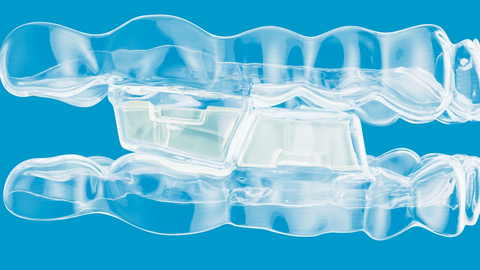

The new system expands Align’s Class II treatment portfolio for growing patients, offering practitioners a comprehensive approach for mandibular retrusion.
Class II malocclusion—characterized by a lower jaw positioned significantly behind the upper jaw—accounts for roughly 30‑45 % of orthodontic cases worldwide. If left untreated, it can lead to functional limitations, aesthetic concerns, and increased risk of temporomandibular disorders.
The Invisalign mandibular‑advancement platform is aimed at patients in the late mixed or early permanent dentition stage (approximately ages 10‑16) who are still experiencing craniofacial growth. By leveraging natural growth potential, the system seeks to correct skeletal discrepancies while simultaneously aligning the dental arches, delivering three core benefits:
- Streamlined treatment workflow: The solid, laser‑welded occlusal blocks provide structural rigidity, allowing vertical opening and early initiation of the mandibular‑advancement phase. This reduces the need for multiple appliances and shortens overall treatment time, especially for deep‑bite and Division 2 cases.
- Enhanced patient comfort and compliance: Blocks are fabricated from Align’s patented SmartTrack™ material, which offers a smoother surface and predictable force delivery. Clinical data suggest that reduced discomfort translates into higher wear‑time adherence, a critical determinant of treatment success.
- Predictable biomechanics: Integrated SmartForce™ features, SmartStage™ sequencing, and optional attachments beneath the blocks enable controlled tooth movement while preventing unwanted rotations. The combination of material science and digital treatment planning yields higher predictability compared with traditional functional appliances.
“This innovation reflects Align’s commitment to expanding digital orthodontics beyond pure dental alignment,” said the company’s EVP and chief product and digital officer. “By integrating skeletal correction into a clear‑aligner workflow, we give clinicians a single platform that addresses both dental and jaw‑position challenges, reinforcing Invisalign’s position as the standard of care in orthodontic digital therapy.”
Clinical leaders have echoed the technology’s potential. An orthodontist in New Zealand, who has treated more than 50 patients with the system, noted that outcomes are comparable to those achieved with traditional Clark Twin Blocks, while offering superior comfort that drives compliance. Practitioners in Australia and Canada reported minimal block fracture incidence, simplifying case management and eliminating the need for auxiliary elastics or palatal coverage.
From a market perspective, the addition of mandibular‑advancement aligners opens a new revenue stream within the growing segment of functional orthodontic appliances—an area historically dominated by removable bulkier devices. Align’s digital ecosystem—combining iTero scanning, exocad CAD/CAM design, and the Align™ Digital Platform—creates cross‑selling opportunities and reinforces the company’s end‑to‑end solution narrative. Analysts project that integrating skeletal correction into the clear‑aligner market could capture up to 12 % of the global functional appliance market by 2028, translating into incremental multi‑million‑dollar revenue for Align, assuming a conservative adoption rate of 5 % among eligible patients.
The new system is now available to Invisalign‑trained providers across Australia, New Zealand, Japan, Hong Kong, Malaysia, Singapore, India, Korea, China, Vietnam and the Philippines. Together with the Invisalign First™ platform and the Invisalign Palatal Expander, the mandibular‑advancement option rounds out Align’s comprehensive offering for patients from early mixed dentition through full permanent growth.
For additional details on the product or to arrange a training session, providers may contact their local Align Technology representative.
1. Compared with prior single‑layer (EX30) aligner material, SmartTrack™ delivers improved force consistency.
2. Patient discomfort with functional appliances has been shown to negatively impact wear compliance, potentially compromising outcomes.
3. In certain cases, attachments under the occlusal blocks may be removed to avoid interference with other features.
About Align Technology, Inc.
Align Technology designs and manufactures the world’s leading clear‑aligner system, iTero™ intraoral scanners and exocad™ dental CAD/CAM software. The company serves roughly 291,000 doctor customers and targets a $600 billion consumer market worldwide. Over its 28‑year history, Align has treated more than 21.4 million patients and continues to advance digital dentistry through its integrated Align™ Digital Platform.
Original article, Author: Jam. If you wish to reprint this article, please indicate the source:https://aicnbc.com/14234.html