
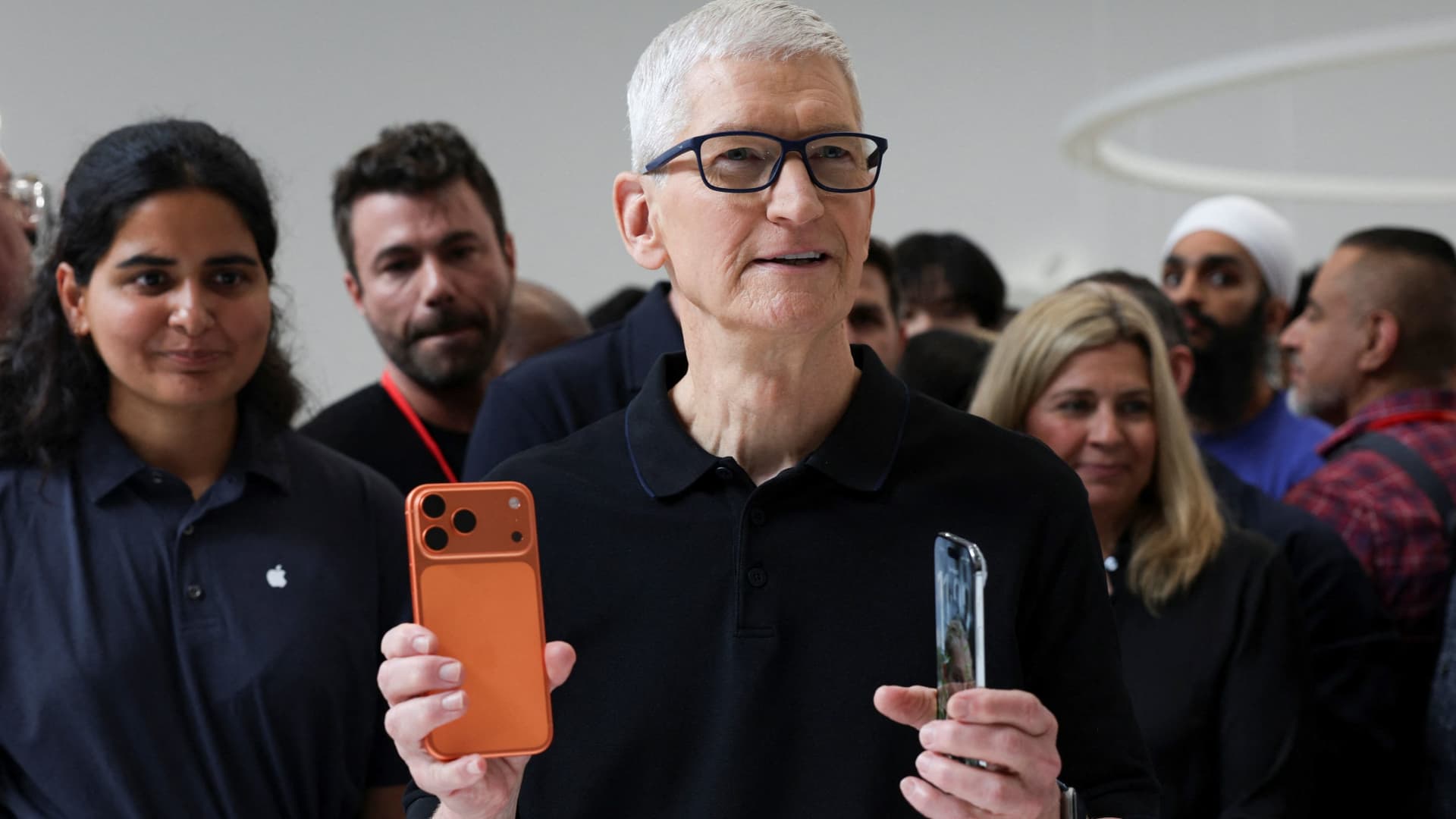


In a recent analysis, the seasoned observer of Wall Street reflected on the remarkable tenure of Tim Cook at the helm of Apple, arguing that the outgoing CEO has achieved what many in the corporate world deem an “almost impossible” feat: building and sustaining the preeminent consumer-based enterprise in history.
As Cook prepares to transition from his CEO role in September, handing the reins to hardware engineering chief John Ternus, his leadership at Apple has been the subject of considerable scrutiny and praise. While early skepticism questioned his ability to fill the colossal shoes of Steve Jobs and maintain Apple’s trajectory, Cook has not only sustained but significantly expanded the company’s dominance. Under his stewardship, Apple’s stock value has surged by approximately 1,900%. More profoundly, however, Cook has cultivated a connection with customers that is exceptionally rare in today’s business landscape.
A poignant illustration of this deep customer engagement can be found in Cook’s own words. In a personal letter, he revealed a daily ritual of reading customer emails, many of which recounted deeply personal stories about the impact of Apple products on their lives. He specifically highlighted instances where the Apple Watch had played a crucial role in saving lives, a testament to the tangible value and emotional resonance of the company’s innovations.
Cook’s sentiment, that “In every one of those emails, I feel the beating heart of our shared humanity,” encapsulates a core tenet of his leadership: an unwavering, authentic commitment to the end-user experience. This user-centric philosophy, according to market analysts, is a key differentiator that has allowed Apple to thrive in a notoriously challenging consumer market, a space where many companies falter in maintaining long-term dominance.
The distinction between consumer-facing and enterprise-driven businesses is a crucial one in valuation. Historically, Wall Street has often favored enterprise companies, assigning them higher price-to-earnings multiples due to the perceived predictability and stickiness of their corporate clients. Consumers, by their nature, can be more fickle. However, Apple, under Cook, has defied this conventional wisdom.
When Tim Cook assumed the CEO position in 2011, Apple traded at a price-to-earnings multiple in the low to mid-teens. Today, it commands a multiple around 30 times forward earnings, a valuation more typically associated with high-margin software giants than hardware manufacturers. This dramatic re-rating, according to financial data providers, reflects Cook’s strategic brilliance in transforming Apple from a cyclical device business into a powerful, enduring brand. He has fostered a fiercely loyal user base and successfully diversified revenue streams through services such as iCloud storage and Apple Music subscriptions, creating more predictable and recurring income.
This strategic pivot towards a services-oriented ecosystem, coupled with an unrelenting focus on user experience and brand loyalty, has been instrumental in Apple’s sustained success and its ability to command premium valuations in the public markets. Cook’s legacy is not just one of financial growth, but of redefining what it means for a technology company to deeply resonate with its customers on a human level.
Original article, Author: Tobias. If you wish to reprint this article, please indicate the source:https://aicnbc.com/20865.html
