
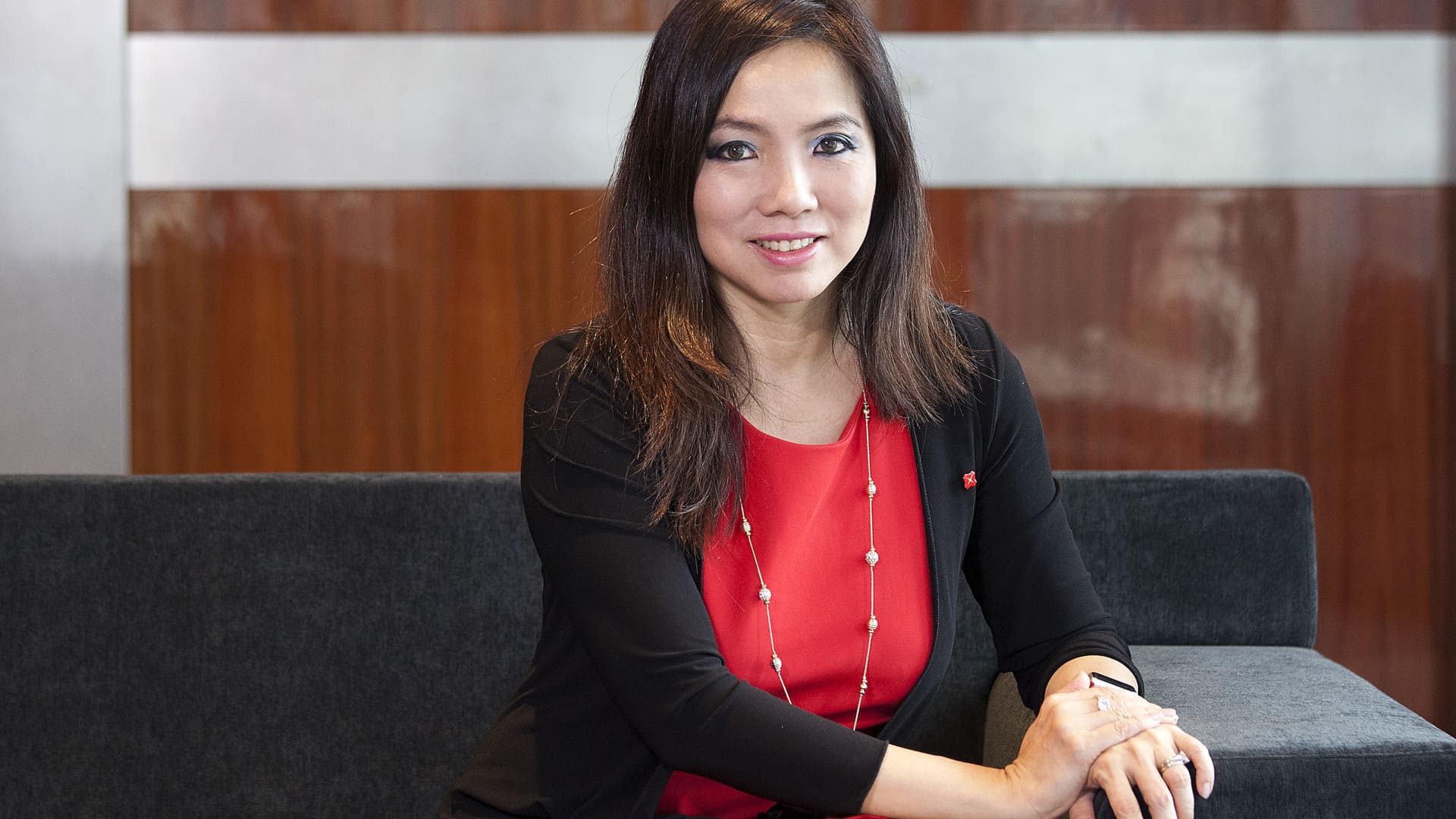

Tan Su Shan is the CEO and director of DBS Group.
Bloomberg | Bloomberg | Getty Images
As valuations in the U.S. stock market reach potentially unsustainable levels, the CEO of DBS Group, Southeast Asia’s largest bank, is advising investors to brace for increased market volatility.
“We’ve seen a lot of volatility in the markets, across equities, rates, and foreign exchange,” DBS CEO Tan Su Shan told CNBC, forecasting that this turbulence is likely to persist. The remarks come as global macroeconomic indicators paint a complex picture, marked by persistent inflation in some sectors and the ongoing recalibration of monetary policy by central banks worldwide.
Tan, who succeeded Piyush Gupta as head of DBS in March, pointed to concerns surrounding the high valuations of artificial intelligence stocks, particularly those of the “Magnificent Seven,” as a significant driver of investor apprehension. The high concentration of capital in these tech giants raises questions about the sustainability of their growth trajectory and the potential for a market correction.
The Magnificent Seven – Amazon, Alphabet, Meta, Apple, Microsoft, Nvidia, and Tesla – have been instrumental in fueling Wall Street’s gains in recent years, with their performance significantly impacting overall market indices. Their dominance has led to increased scrutiny of their business models and valuations, particularly in light of evolving regulatory landscapes and shifting consumer preferences.
“You’ve got trillions of dollars tied up in seven stocks, for example. So it’s inevitable, with that kind of concentration, that there will be a worry about when this bubble will burst?” Tan stated, highlighting the systemic risk associated with such concentrated investments.
Speaking earlier this week at the Global Financial Leaders’ Investment Summit in Hong Kong, concerns about potential market drawdowns were pervasive. Several analysts suggested that a 10%-20% correction could occur within the next 12 to 24 months, driven by factors such as rising interest rates, geopolitical tensions, and unexpected economic shocks.
Morgan Stanley CEO Ted Pick echoed this sentiment at the same summit, suggesting that investors should welcome periodic pullbacks as healthy market adjustments rather than signs of an impending crisis. Such corrections offer opportunities for strategic repositioning and can help to temper excessive speculation.
Tan concurred, stating, “Frankly, a correction will be healthy.” She highlighted recent examples such as Advanced Micro Devices and Palantir, both of which reported stronger-than-expected quarterly results but saw their shares, and the wider Nasdaq, decline. This suggests that market sentiment is becoming increasingly sensitive to valuation concerns, overriding positive earnings reports.
Her warnings align with similar cautions from the International Monetary Fund and central bank leaders like Jerome Powell and Andrew Bailey, all of whom have expressed concerns about inflated stock prices. These warnings underscore the need for investors to exercise caution and adopt a more diversified approach to their portfolios.
Singapore as diversification play
Tan advocated for diversification as a risk management strategy, urging investors to avoid concentrating holdings in a single market. “Whether it’s in your portfolio, in your supply chain, or in your demand distribution, just diversify,” she advised. This approach can help to mitigate the impact of market-specific shocks and ensure a more balanced and resilient investment strategy.
Drawing on her extensive experience in banking and wealth management, Tan suggested that Asia could attract increased investment from the U.S., emphasizing that such a shift would be mutually beneficial. The region’s strong growth prospects, coupled with its increasingly sophisticated financial markets, make it an attractive destination for global capital.
Specifically highlighting Singapore and the Monetary Authority of Singapore’s (MAS) efforts to promote the local markets, Tan described the city-state as a “diversifier market.” Singapore’s robust regulatory framework, stable political environment, and status as a leading financial hub make it well-positioned to benefit from increased capital inflows.
“We’ve got rule of law. We’re a transparent, open financial system and stable politically. We’re a good place to invest…. So I don’t think we’re a bad place to think about diversifying your investments,” Tan concluded, emphasizing Singapore’s appeal as a safe and reliable investment destination. Singapore’s commitment to innovation, particularly in fintech and sustainable finance, further enhances its attractiveness to global investors seeking long-term growth opportunities.
Stock chart icon

Original article, Author: Tobias. If you wish to reprint this article, please indicate the source:https://aicnbc.com/12512.html
