
“`html
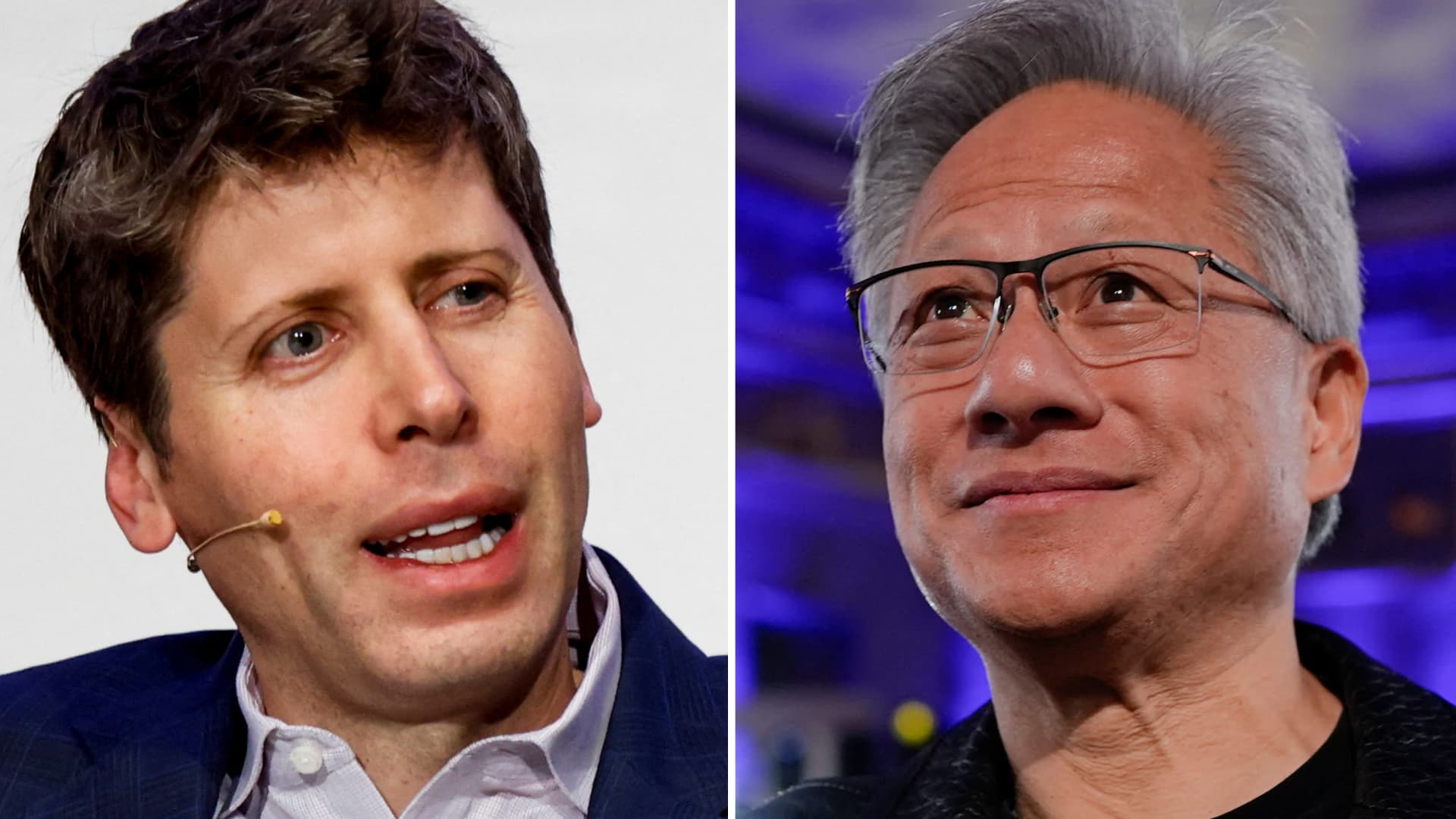

Two months ago, Nvidia CEO Jensen Huang and OpenAI CEO Sam Altman shared a stage in San Jose, California, announcing what seemed like a landmark collaboration between the two AI powerhouses.
The headline: Nvidia would reportedly invest $100 billion over several years, starting in 2026, as OpenAI’s next-generation AI supercomputing infrastructure comes online. Details regarding the specific build-out schedule and individual data center costs remained under wraps.
However, in Nvidia’s recently released quarterly financial report, the chipmaker subtly tempered expectations, reminding investors of a crucial distinction: an announcement is not a binding contract.
“There is no assurance that we will enter into definitive agreements with respect to the OpenAI opportunity or other potential investments, or that any investment will be completed on expected terms,” Nvidia stated in the risk factors section of its filing, a standard disclaimer but one that carries significant weight given the sheer scale of the proposed OpenAI investment.
Nvidia has been actively deploying its substantial cash reserves, strategically investing in companies that utilize its graphics processing units (GPUs). Besides the OpenAI arrangement, Nvidia highlighted a $5 billion commitment to Intel during the quarter, and its agreement this week to invest up to $10 billion in Anthropic, another leading AI firm.
While an OpenAI spokesperson declined to comment, they referred to Huang’s previous statements, including his characterization of OpenAI as a “once-in-a-generation company” and his belief that the investment would “translate to extraordinary returns.”
The key difference regarding the OpenAI deal lies in the sheer magnitude of the proposed investment and the specific benchmarks that must be achieved for the funds to be fully disbursed. Sources indicated that an initial $10 billion would be readily available to OpenAI to facilitate the deployment of its first gigawatt of computing capacity.
Altman recently revealed that OpenAI anticipates concluding the year with a $20 billion annualized revenue run rate, a remarkable figure considering ChatGPT’s relatively short three-year lifespan. The company projects reaching hundreds of billions of dollars in revenue by 2030. However, even those bullish projections may not entirely alleviate OpenAI’s capital-intensive needs.
Overall, OpenAI has unveiled approximately $1.4 trillion in infrastructure spending commitments across various partnerships as it endeavors to further develop its AI models and services. The company remains heavily reliant on external financing to realize these ambitious goals.
Despite the apparent ambiguity surrounding the September announcement, Nvidia executives remain optimistic about their collaborative efforts with OpenAI. During Nvidia’s earnings call, CFO Colette Kress emphasized OpenAI’s growth trajectory, citing its expanding user base, growing enterprise adoption, and healthy gross margins.
“OpenAI recently shared that their weekly user base has grown to 800 million, enterprise customers has increased to 1 million and that their gross margins were healthy,” Kress noted. She further stated that the two companies are “working on a strategic partnership” with Nvidia “focused on helping them build and deploy at least 10 gigawatts of AI data centers.”
Huang reinforced this sentiment, stating explicitly, “Everything that OpenAI does runs on Nvidia today.” This reinforces Nvidia’s current dominance in the AI infrastructure space.
While OpenAI’s continued data center expansion will undoubtedly drive demand for Nvidia’s chips, the company has also forged partnerships with Nvidia’s primary competitor, Advanced Micro Devices (AMD). Last month, OpenAI formally agreed to deploy 6 gigawatts of AMD’s Instinct GPUs over the coming years, across multiple hardware generations, starting in the second half of next year. This represents a significant validation of AMD’s growing capabilities in the AI acceleration market and presents a competitive dynamic that Nvidia must navigate.
The AMD agreement possesses one crucial element currently absent from the Nvidia arrangement: a signed, legally binding contract that offers greater certainty and mutual commitment.
As part of the AMD agreement, OpenAI received a warrant for up to 160 million shares of AMD’s common stock. The vesting milestones for this warrant are intrinsically tied to deployment volume and AMD’s share price, aligning the interests of both firms and creating a strong incentive for successful collaboration. The agreement was officially signed on October 5th.
“`
Original article, Author: Tobias. If you wish to reprint this article, please indicate the source:https://aicnbc.com/13205.html
