
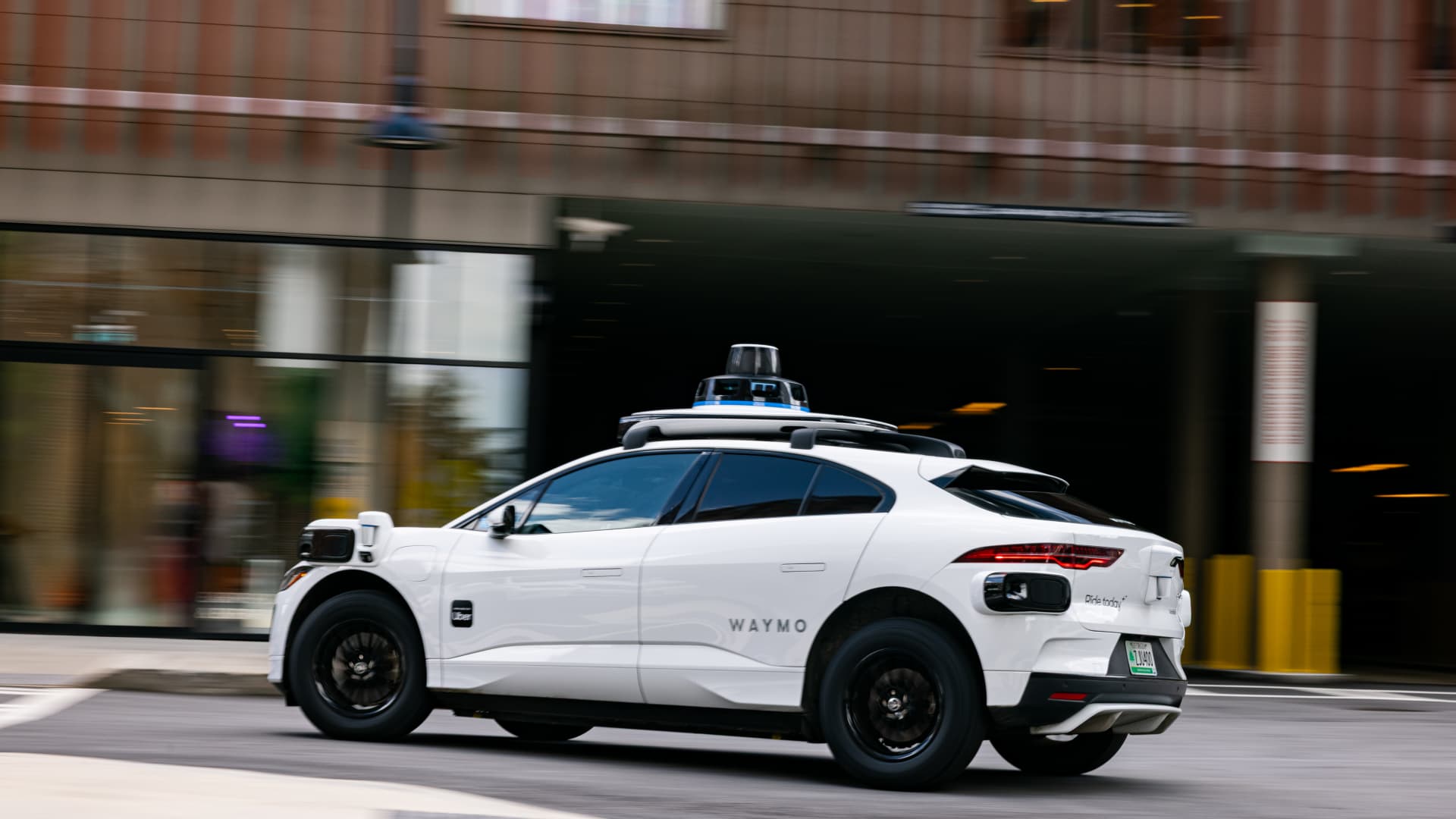

Waymo has announced a partnership with Uber to expand its robotaxi service into the Atlanta and Austin markets.
Uber Technologies Inc.
Waymo said on Wednesday that human drivers will begin test‑driving its autonomous vehicles in Baltimore, Pittsburgh and St. Louis. These three cities are the latest additions to a rapidly expanding footprint that now includes 26 markets across the United States.
According to spokesperson Ethan Teicher, manual drives will start this week with the goal of transitioning to fully autonomous rides once the data validates safety and reliability thresholds.
Waymo’s aggressive rollout follows a busy month of announcements from the Google‑affiliated company. Competitors such as Amazon and Tesla have also stepped up their robotaxi ambitions in 2025. Amazon’s Zoox launched complimentary rides in Las Vegas and San Francisco, while Tesla introduced a supervised ride‑hailing service in Austin and San Francisco.
In November, Waymo revealed plans to commence manual drives in Minneapolis, Tampa, and New Orleans, and added Houston, San Antonio and Orlando to its 2026 launch schedule. The company also rolled out highway‑capable rides in the San Francisco Bay Area, Los Angeles, and Phoenix markets, and appointed a new chief financial officer to guide its expanding operations.
With more than 250,000 weekly paid trips, Waymo’s robotaxi fleet currently serves Austin, the San Francisco Bay Area, Phoenix, Atlanta and Los Angeles. In May the company reported that it had completed over 10 million paid rides since the service launched in 2020.
Expanding into colder‑climate cities like Baltimore and Pittsburgh highlights Waymo’s confidence in its sensor suite and software stack to handle adverse weather conditions—a critical capability for scaling nationwide.
Business and technology outlook
Waymo’s rapid market expansion underscores a broader shift in the autonomous‑vehicle industry toward commercial viability. The company’s average revenue per ride is estimated at $15, driven by premium pricing for fully driverless trips and a growing base of corporate and municipal contracts.
From a technology perspective, Waymo continues to refine its lidar, radar, and camera fusion algorithms, achieving sub‑30‑centimeter positional accuracy in urban environments. Recent software updates enable dynamic routing on highways, reducing travel time by an average of 12 % compared with earlier releases.
Financial analysts project that Waymo could capture 5–7 % of the U.S. ride‑hailing market by 2028, translating to annual revenues north of $2 billion. This growth trajectory is supported by strategic partnerships—most notably the new agreement with Uber, which provides Waymo access to Uber’s extensive rider network and logistical infrastructure.
However, the path ahead is not without challenges. Regulatory scrutiny remains intense, particularly in states with stringent safety testing requirements. Additionally, competition from Amazon’s Zoox and Tesla’s Full Self‑Driving (FSD) platform forces Waymo to continuously innovate while keeping operating costs in check.
Investors will be watching Waymo’s ability to sustain high utilization rates across its expanding city portfolio. Success will depend on scaling the fleet efficiently, maintaining safety benchmarks, and delivering a seamless rider experience that rivals traditional ride‑hailing services.
Waymo’s latest moves signal a decisive push toward becoming the dominant player in the emerging robotaxi market, leveraging its technical edge and strategic alliances to outpace rivals.
Original article, Author: Tobias. If you wish to reprint this article, please indicate the source:https://aicnbc.com/13990.html
